
Streamlining Apartments Layout Testfit at Hickok Cole Architects
The Challenge
The process of laying out apartment units during the conceptual design stage of a multifamily project is time-consuming and tedious, especially when done manually using tools like Revit. By integrating Revit with Dynamo, we developed a custom tool that allows designers to explore, automate, and produce interactive multifamily unit layouts in half the time. The tool utilizes a simple sketch-based process to convert a 2D building shape into a conceptual floor plan layout based on a defined set of parametric relationships and criteria–including building shape, layout, unit type and size, single versus double corridors, and number of floors. The result accelerates two fundamental tasks: developing a conceptual floor plan and achieving the identified target unit mix.
1- Generate a master planning grid from different building 2D shapes.
2- Conceptual floor plan layout targeting best unit mix fit targeted.

The Six Targeted Business Goals
Our efforts were guided by the following set of principles designed to ensure we were maintaining the level of design quality, creativity, and project value clients expect from our teams–while increasing efficiency and adaptability.

This concept produces a 2D master planning grid from a corridor center 2D Revit line sketch which then generates a master planning grid within a given building boundary. The goal is to create a Dynamo script that can apply to different building shapes and typical multifamily typologies. Our approach allows the user to sketch 2D corridor lines in Revit to cover the different project layouts. We then transform the relationship between these 2D corridor lines (main, branch, and end) and the parametric inputs/constraints to generate a master planning grid layout.
This master planning grid achieves two paradigm shifts:
1- Pre-coordinating the relationships between the typical apartment units — especially for modular construction and vertical stacking.
2- Meeting current and future challenges — such as design flexibility, future building usage change, and potential for off-site prefabrication.
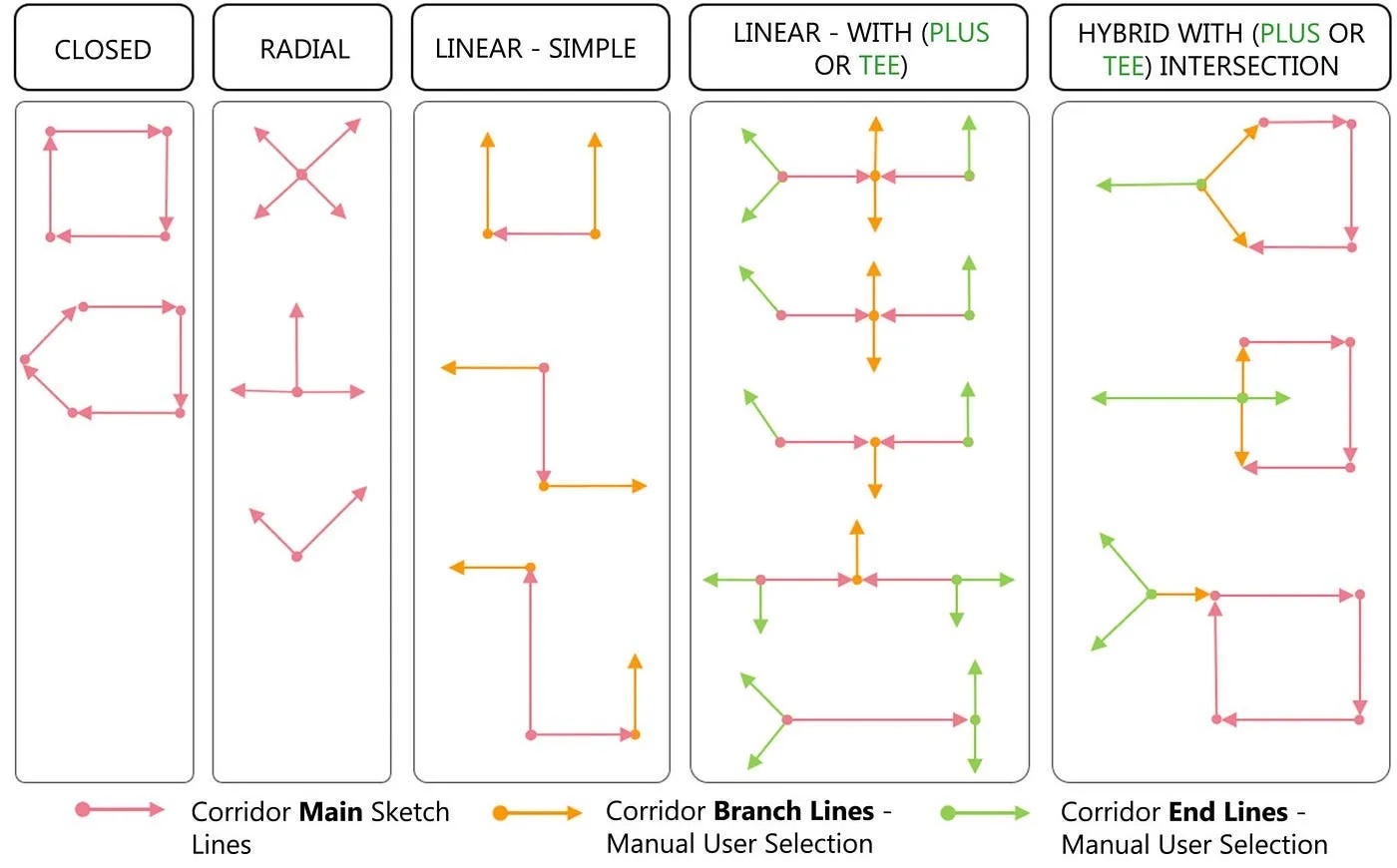
The development in this phase helps the designers to perform and generate a test-fit for different plan layout configurations. The dynamic overlay of the apartment units aligns with the master planning grid and in a coordinated manner. This paradigm shift focuses on informing the designer with the feasibility about the units placement per the master planning grid which results in pre-coordinating the relationships between the building components especially for modular stacking. It also allows to meet other design challenges such as: design flexibility, future building usage change, and potential for off-site prefabrication.
Therefore, the tool extracts several several spatial assignments of the different building bare zones and for a given building shape. The examples for building bar compositions in different multi-family projects is shown below. These Right/Left zones become a “container” bar where the Dynamo Bin Packing algorithm is applied for best-fit of the units and hence perform quick test-fit task. The remaining areas of the floor layout are reserved to calculate the inner/outer units count.

The Result
This work demonstrates the potential and the creative value from automating manual design tasks for multi-family residential project development. The journey during this development was full of challenges and we encountered several adjustments to the Dynamo script per feedback from the users.
This tool is a prototype but saves time and increases efficiency when translating user input and design standards to generate a conceptual floor plan layout. The users are capable of sketching quickly a 2D concept of a plan and generating multiple units packing 3D design options using the Dynamo Packing function.
The tool complements the designer’s experience and has potential for enhancement in future developments. We also recognize that availability of commercial test-fit tools which encourage us to stay open for exploring a hybrid workflow using enhanced features in these commercial tools. Modular design holistically is a challenging design task, but we are beginning to understand it in order to modify many of the back-end features of our tool to capture more data metrics and variances among different design typologies.

Thanks to Hickok Cole Team:
Zaki Mallasi: Associate, Digital Design and Technology Manager, PhD, LEED AP BD+C
Jason Wright: Associate Principle, AIA, LEED AP BD+C
John Lang: Senior Associate, AIA
Chris D. French: Multi-family Project Developer, LEED AP BD+C, ULI
Recent Articles
Learn about the latest architecture software, engineering automation tools, & construction technologies