
The Busywork Disappears, Not the People: Unanet on AI in AEC

- Why generic AI alone isn't enough for project-based businesses
- How AI can connect ERP, CRM, project data, and institutional knowledge
- Where AI can support business development and proposal teams
- How firms can approach AI adoption with stronger governance and trust
- Why agentic AI could change how firms identify risk and coordinate action
- Why the future is less about replacing people and more about removing repetitive work
AI Moves Into the Business
Q1: AI has become part of everyday work in AEC. What changes have you observed over the past year?
The biggest change is that the conversation has moved from "Should we use AI?" to "Where should we use it?"
A year ago, a lot of firms were still experimenting. People were using AI to summarize documents, draft an email, brainstorm ideas, or improve a piece of writing. Those are useful applications, and they helped the industry become comfortable with the technology.
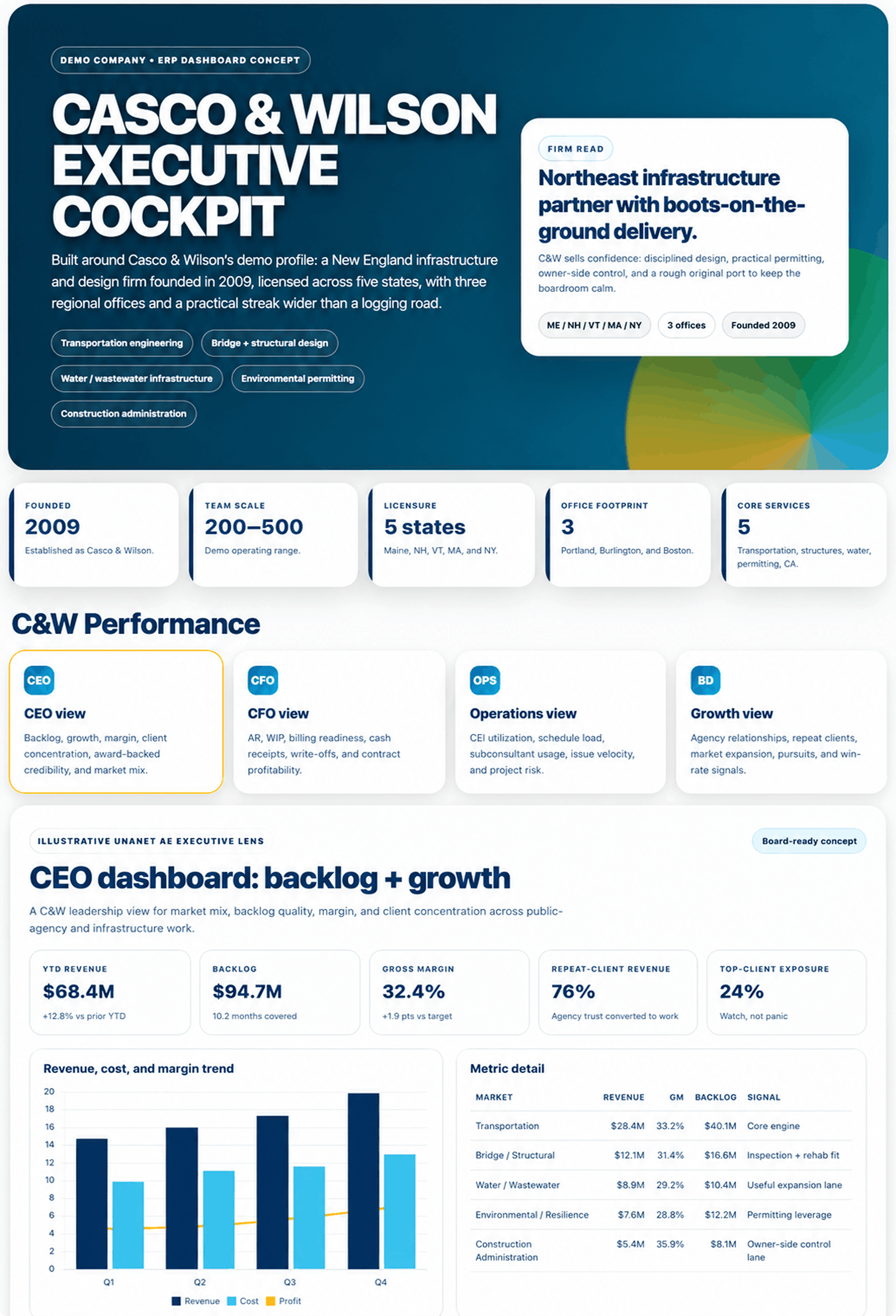
But expectations are changing quickly. People are beginning to ask why AI can't help with the work that consumes much more of their day: understanding project performance, preparing for a client meeting, identifying a risk, finding relevant experience for a pursuit, following up on an action item, or understanding what is happening across the firm. That's an important shift. We're moving from AI as a tool you go to toward AI as intelligence that becomes part of the way work gets done.
For AEC firms, I think that's where the opportunity becomes much more meaningful. The real value isn't simply generating something faster. It's using AI to make the information already flowing through the business more useful—so people can understand context, make confident decisions, and take action.
"We're moving from AI as a tool you go to toward AI as intelligence that becomes part of the way work gets done."
Q2: Many firms already use tools like ChatGPT. Why isn't generic AI enough for project-based businesses?
Generic AI is incredibly useful. But there's an important difference between an AI model that understands the world and an AI system that understands your specific business, in this case AEC project work.
Think about the questions that matter inside an architecture or engineering firm:
- Which projects are putting margin at risk?
- Do we have enough capacity for the work we're pursuing?
- What's happening with a strategic client? (and why?)
- Which past projects give us the strongest position for this opportunity?
- Why is utilization changing? (and what can we do about it?)
- Which invoices need attention?
- What commitments came out of the last client meeting?
And context alone isn't enough. That information also has to be trusted and governed. The AI needs to understand what a person is allowed to see, where an answer came from, and when a human should remain in control.
That's why we've been very intentional about the way we think about ChampAI, our AI portfolio at Unanet. AI for project-based work has to be grounded, trusted, contextual, assistive, and increasingly agentic. It shouldn't just know how to answer a question. Over time, it should understand enough about the business process to help move the work forward.
Q3: Why was it important to bring AI into both ERP and CRM workflows?
Because the business doesn't start when a project is won.
Project work has a lifecycle. You build relationships. You identify opportunities. You decide what to pursue. You develop proposals. You win work. Then you have to staff it, deliver it, invoice it, collect the cash, understand the outcome, and use what you've learned to make the next decision.
Historically, those have been treated like separate systems and sometimes even separate conversations. But AEC leaders don't think that way. A president or COO doesn't want to understand pipeline without understanding capacity. A finance leader doesn't want to understand backlog without understanding what may be coming next. A seller-doer doesn't just care about winning the project; they care whether the firm can deliver it successfully.
That's why connecting AI across the business matters. For Unanet, we're tackling that on two fronts with ChampAI. First, we've embedded AI intelligence, guidance, and answers directly into the places where work already happens. With Champ Agents, powered by Wyatt, we've extended that idea with an agentic workspace that can work across Unanet and other connected business systems.
And this all works toward a singular goal: helping firms connect what is happening across their projects and business, and turn that context into meaningful outcomes.
Q4: What business questions should AI help architecture and engineering firms answer in the future?
I think the most interesting questions are the ones firms struggle to answer quickly today.
Not simply: “What was our utilization last month?” But: “Where is utilization likely to become a problem, and what can we do about it?”
Not simply: “What is this project's current profit margin?” But: “Which projects are trending toward margin erosion, what's driving it, and where should we intervene?”
Not simply: “What's in our pipeline?” But: “Are we pursuing the right mix of work based on our strategy, capacity, experience, and profitability?”
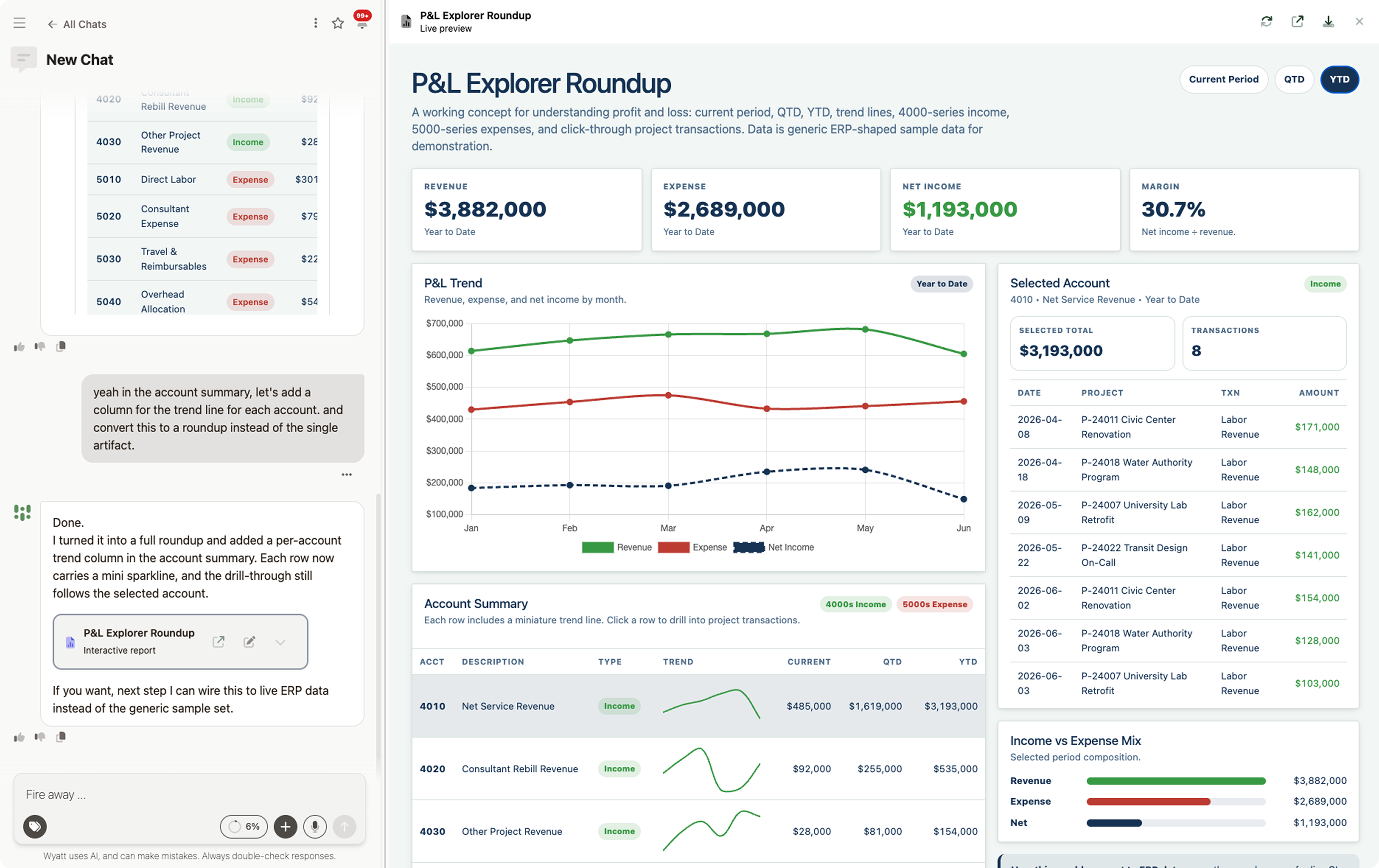
That's the broader shift I see happening in business software. For years, we built systems that were very good at recording transactions and telling us what happened. Then we added dashboards to make that information easier to see. AI gives us an opportunity to go further—from tracking the business to helping drive the business.
That means identifying what needs attention, explaining why it matters, recommending what should happen next, and even helping coordinate the work required to respond. For project-based businesses, that's a much more powerful vision than simply adding a chatbot or generative AI to an existing application.
Winning Work With AI
Q5: How do you see AI changing the way firms pursue and win new work?
AEC business development has always been highly relationship-driven. That's not going away. If anything, AI should make those relationships more important; not less.
The challenge is that much of the context surrounding those relationships lives outside of traditional CRM systems. It's in emails, meetings, conversations, notes, documents, and the memories of seller-doers who are simultaneously trying to deliver projects. Then we ask those same people to stop what they're doing and manually reconstruct that activity inside another system.
AI creates an opportunity to flip that model. Instead of asking people to constantly document the work they've already done, AI can increasingly help capture and organize the context created through everyday business development activity. That means a seller-doer preparing for a meeting could understand the firm's history with an organization, recent activity, relevant projects, active pursuits, and who else inside the firm has a relationship—all without spending half the day hunting for it.
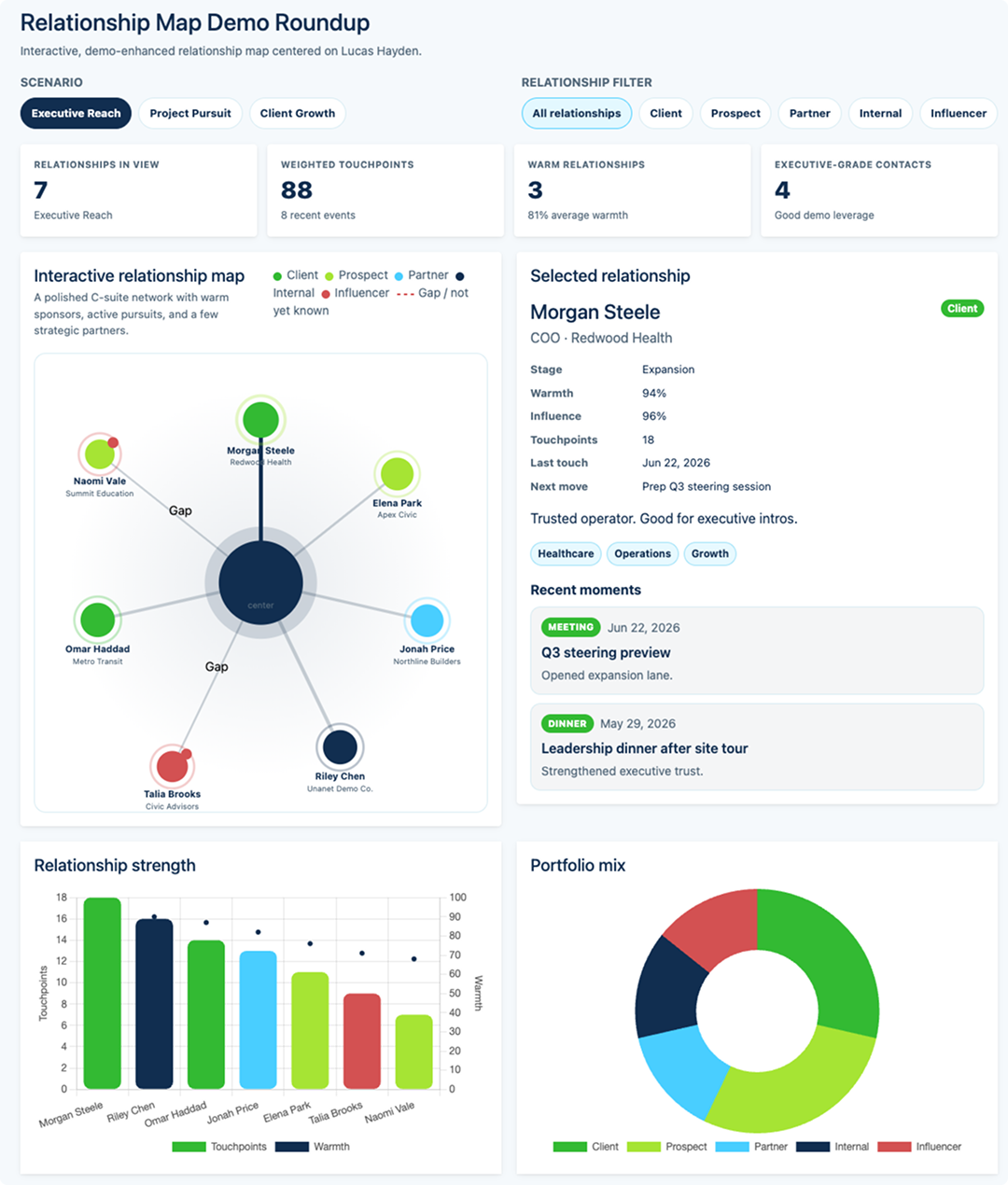
A BD leader could spend less time piecing together what is happening and more time deciding where the firm should focus. The goal isn't to automate relationships. It's to give people more leverage in building them. It's like winning work without all the typical busywork.
"The goal isn't to automate relationships. It's to give people more leverage in building them."
Q6: Proposal development is evolving rapidly. What opportunities do you see for AI in this area?
Proposal teams are a great example of where the conversation about AI needs to mature. The obvious use case is content generation. And yes, AI can help draft and refine content. But that's only part of the process.
Ask a proposal professional where their time goes and you'll hear about finding the right project examples, locating resumes, validating experience, gathering input from subject matter experts, understanding the client, interpreting an RFP, coordinating contributors, and making sure the response tells a differentiated story.
That's where I see the bigger opportunity. AI can help teams assemble the right context much earlier in the process: What experience is most relevant? Which people strengthen our position? What do we already know about this client? What differentiated themes should the team explore? What information are we missing? In other words, AI should help proposal professionals spend less time gathering and assembling and more time thinking strategically about how to win.
The human role remains incredibly important. Strategy, judgment, creativity, relationships, and a compelling point of view are still human strengths. The opportunity is to remove the friction around those activities so talented people can spend more time doing the work that actually differentiates the firm.
Trust, Governance & Adoption
Q7: Many firms remain concerned about security and governance. How is Unanet approaching responsible AI adoption?
Those concerns are appropriate. If AI is going to become part of important business workflows, firms have to trust it. And trust isn't something you just bolt on.
For us, responsible adoption begins with a few basic principles. AI should be grounded in trusted business information. Access should respect the permissions and controls surrounding that information. People should be able to understand the context behind important answers. And there should be a clear distinction between work the AI can assist with and decisions that still require human judgment or approval.
I also think governance has to extend beyond technology. Firms need to decide where AI is appropriate, who owns particular workflows, how results are reviewed, and what success looks like. Those are operating-model questions as much as technical ones.
That's why I don't think the most successful firms will simply be the ones that adopt the most AI. They'll be the firms that create enough trust and governance that their people are comfortable using AI for increasingly meaningful work.
Q8: If a firm is just beginning its AI journey, where should it start?
Don't start with the question, "Where can we put AI?" Start with the work.
Find a process people complain about. Something repetitive. Something that requires people to gather information from multiple places. Something where the right context exists but is difficult to access at the right moment.
Then ask a few questions:
- What outcome are we trying to improve?
- What information does someone need to do this work well?
- Where does that information live today?
- What judgment still belongs with a person?
- What would success look like?
That gives you a much better starting point than launching a broad AI initiative. It could be project risk review. Timesheet compliance. Client meeting preparation. Pursuit qualification. Proposal research. Accounts receivable follow-up.
Pick something meaningful, establish the right guardrails, measure whether it actually improves the process, and learn from it. Then expand. The firms that approach AI this way will develop something much more important than a collection of AI tools: they'll develop an organizational capability for working with AI.
"Don't start with the question, 'Where can we put AI?' Start with the work."
What Comes Next
Q9: Looking ahead three to five years, how do you think AI will change the way AEC firms operate?
I think we'll look back at today's experience as the very beginning. The long-term change isn't that everyone will have a better way to ask questions. It's that our business systems will become much more active participants in how work gets done.
Today, people spend an enormous amount of time acting as the connective tissue between systems. They notice something, look up information somewhere else, send an email, update a spreadsheet, remind somebody, check whether something happened, and then update another system. AI agents create the possibility of coordinating much more of that work.
Imagine a business system that recognizes that a project is trending off plan, understands the relevant financial and resource context, surfaces the issue to the right person, recommends an action, and helps coordinate the follow-up. Or one that recognizes an emerging pursuit, assembles the relationship and experience context around it, and helps the growth team determine what should happen next.
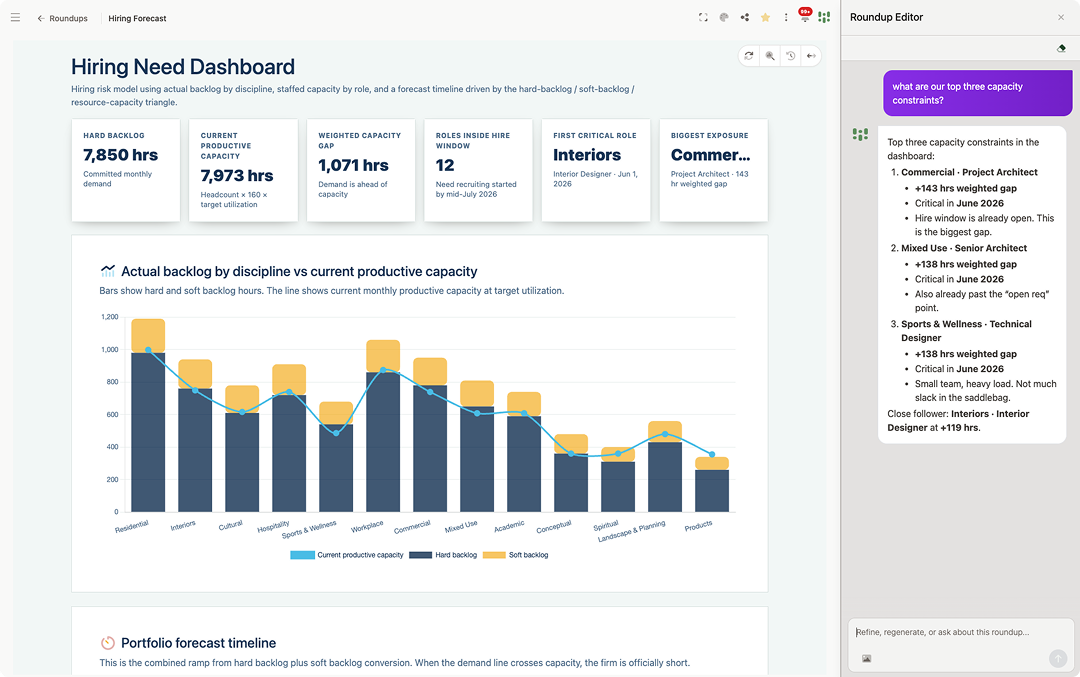
That's where I think this is going. The people don't disappear from the process. The busywork does. And that may ultimately be the biggest opportunity AI creates for AEC firms.
For decades, we've asked highly skilled architects, engineers, project managers, finance leaders, marketers, and business developers to spend too much of their time finding information, updating systems, coordinating routine work, and reconstructing context. The next generation of business technology should take on more of that burden.
So when I think about AI three to five years from now, I don't primarily think about better prompts. I think about firms that can sense what is happening across the business, understand it sooner, and coordinate action faster. Less time tracking the business. More ability to drive it. And ultimately, more time for people to do the work that moves the firm - and the industry - forward.
The aec+tech Takeaway
The next phase of AI in AEC isn't about stacking on more standalone tools — it's about wiring intelligence into the systems, data, and workflows firms already run on. As AI becomes more contextual and agentic, the real opportunity is stripping friction away from skilled professionals, while keeping human judgment, relationships, trust, and governance firmly at the center.
To learn more about Unanet, visit their page on aec+tech or explore more on the official Unanet website.

Senior Director of AEC Strategy at Unanet, Lucas Hayden has spent 15+ years inside architecture and engineering firms' ERP systems — and in this conversation, he makes the case for why generic AI can't answer the questions that matter most inside a firm.
Recent Articles
Learn about the latest architecture software, engineering automation tools, & construction technologies