
AI Plan Review Isn't About Speed. It's About Staying Out of Court.
This conversation brought together Colton Johnson, Principal Engineer at Flint Engineering Company; Aakash Prasad, Co-founder and CEO of InspectMind AI; and Simon G. Solorio, President of Solorio Inc. Much of the discussion centered on InspectMind AI's plan-checking tool, though the takeaways apply to any firm weighing this kind of software.
In this article you’ll see where AI plan review helps, where it falls short, and why a firm with weak internal processes will not get much out of it no matter how good the software gets.
Reading a Pictorial Language
Plan review is not just about reading text. Construction documents carry meaning through symbols, callouts, line weights, and schedules that change from one project type to the next. An industrial set does not look like a large residential set. Every new hire has to learn how to read that visual system before they can review anything in it.
"Construction documents are a language, and on top of that they're a pictorial language. You're relying on graphic and visual cues to display the information, translating heavy analysis and code requirements into those pictures."
— Colton Johnson, Principal Engineer, Flint Engineering Company
Solorio described the second half of the problem: volume.
Even with tools like Revit and virtual walk-throughs on Meta Quest headsets, engineers still check ever-changing building codes by hand and coordinate across disciplines. Holding hundreds of pages of drawings against dense architectural, structural, mechanical, and civil specifications is a cognitive load that does not scale. There is only so much one person can keep straight at once, and plan sets keep getting bigger.
That is the gap AI steps into. Not the design work or the engineering judgment, but the slow, repetitive cross-checking that wears people down and still lets errors slip through.
A Third-Party Reviewer That Works Through Lunch
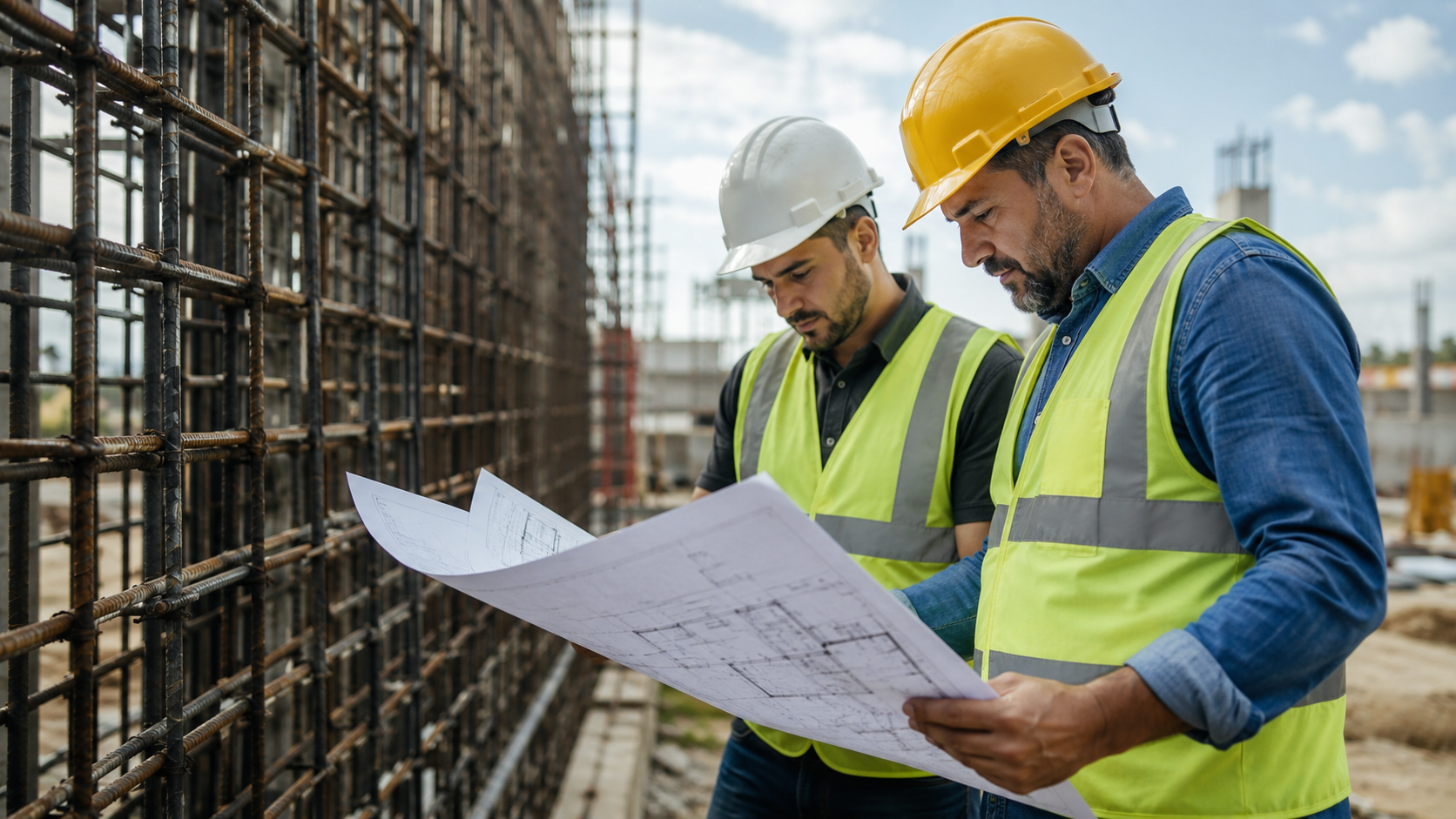
AI is a third-party reviewer. It’s not a replacement for the engineer or the plan checker, but an extra set of eyes that never gets tired and never skips a page.
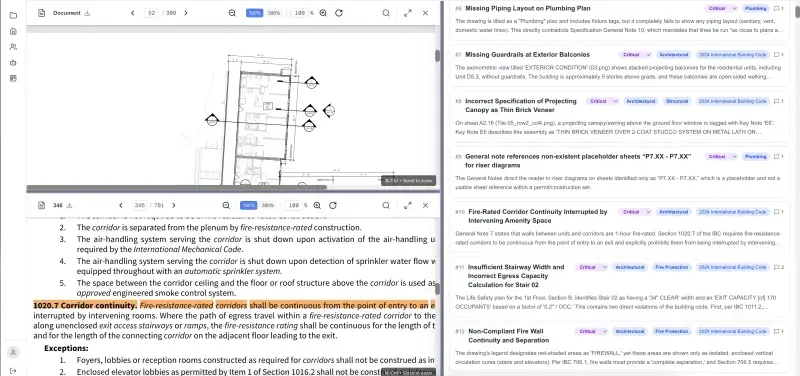
Prasad said InspectMind AI can typically review a 100- to 200-page project in one to two hours. In that window it catches discrepancies between drawings and specs, flags cross-discipline coordination issues, and checks against selected/applicable codes and references. It surfaces a prioritized set of findings while the team continues other work.
InspectMind AI has flagged a water main running straight into a 12-inch concrete pipe. It has caught a storm sewer drawn with no slope, which means it would never drain. These are the errors that hide on page 140 of a set and get expensive once they reach the field.
"This isn't replacing your own diligence or your own quality of work. It's a useful automated review tool that helps you reduce risk and liability and improve quality overall."
— Aakash Prasad, Co-founder and CEO, InspectMind AI
The discussion was honest about the limits, too. AI still struggles to read the purely graphical parts of a drawing when there are no words or numbers to anchor it. That should improve over the next few years, but for now InspectMind AI is strongest where drawings, specs, and code references can be grounded and cited. Purely graphical meaning, where the intent lives only in the picture, is still an area where human review matters.
From Months of Back-and-Forth to Days
A minor discrepancy on a drawing is not just a quality problem. It is a liability problem. Prasad pointed to ADA compliance as an example. A ramp drawn with a 2.2 percent slope instead of the required 2 percent maximum is a small number on a sheet and a frequent target for litigation. Catching it before construction starts is worth far more than the hour it saved.
The same logic runs downstream. Errors that survive review become Requests for Information (RFIs) and change orders once contractors are on site. Each one costs time and money and strains the client relationship. The financial case lives in catching those errors early.
A church project in California shows how that plays out. The design firm ran its full drawing set (architecture, civil, structural, and specs) through InspectMind AI before submitting to the city. The AI flagged around 300 issues. The team fixed them first. When the city's review came back, the comments were mostly minor, and the firm closed them out in days rather than the weeks or months a project like this can take.
That is the payoff that matters. Not the hours saved running the review, but the weeks of back-and-forth with the jurisdiction that never happened, and the rework that never reached the field.
Garbage In, Garbage Out Still Applies
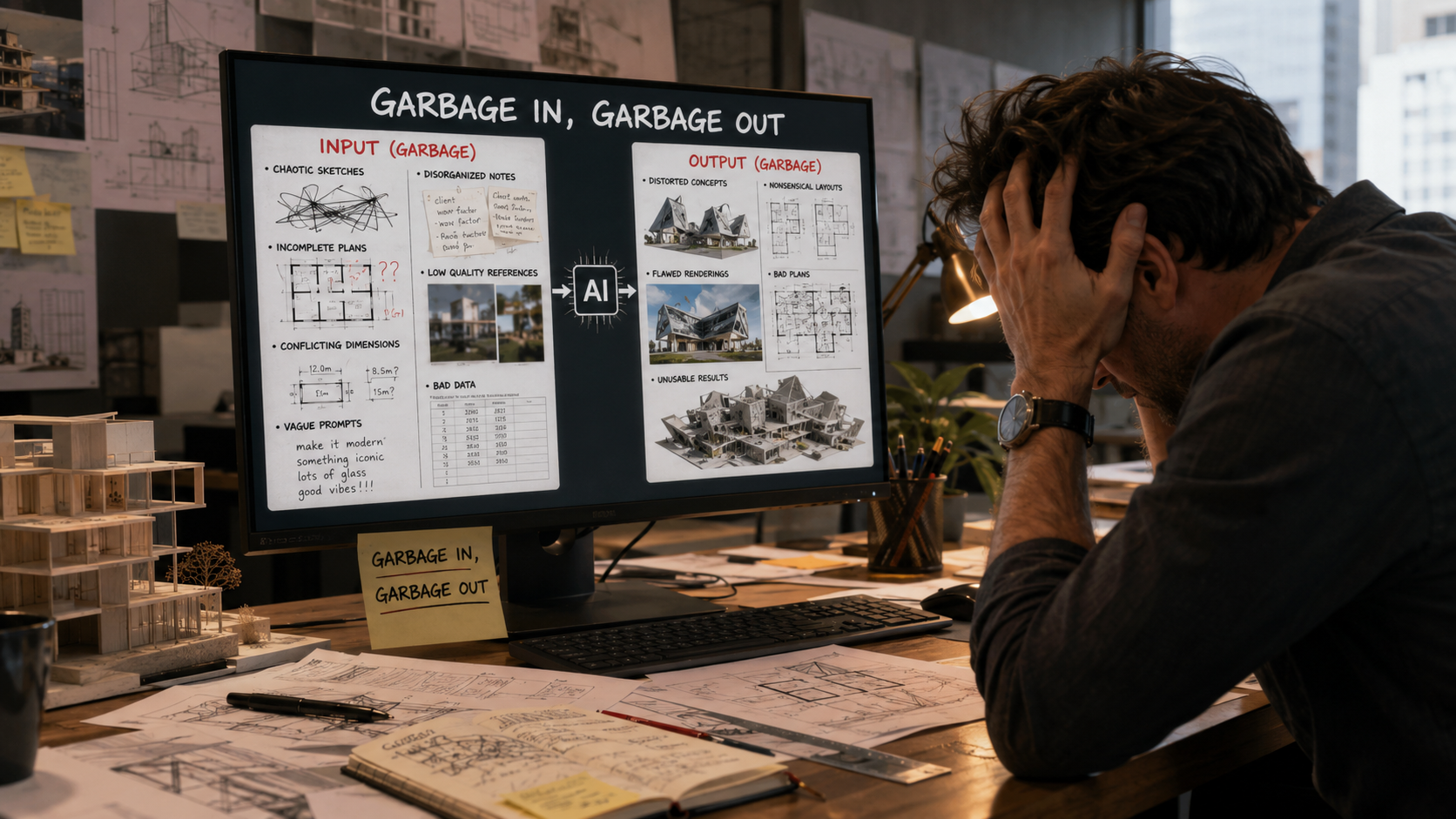
The strongest warning has always been against leaning on the tools too hard. The old 'garbage in, garbage out' rule still stands.
The software is powerful, but it sits on top of a firm's inputs, its standards, and the judgment of the people running it.
Solorio made the case for foundational knowledge. Junior engineers still need to learn the basics through hand calculations and free-body diagrams so they understand how loads travel and what a structural member is actually doing. Without that, an engineer cannot tell when the AI is wrong.
"If you put in garbage, you're going to get out garbage, and that's still true with these new programs. If you put in something wrong, it gives you something wrong. You have to know the basics to know when it's giving you wrong information."
— Simon G. Solorio, President, Solorio Inc.
Johnson framed the same idea as a sequence. He sees a working AI workflow as a three-tier system.
A firm establishes good internal processes first. Then it introduces standard automations. Only then does it put AI at what he called the tip of the spear. Skip the first two steps and there is nothing solid for the AI to stand on. When a firm's drawing standards and inputs are inconsistent, there is no realistic way to scale an AI workflow on top of them.
Own the Output
Accountability is the other side of this. When an engineer signs off on a design, they own it, whatever tools helped produce it.
"The motto we live by with AI is own the output. Just because you have a cool tool doesn't mean you get to say that the tool is the reason something was wrong. You own the output."
— Colton Johnson, Principal Engineer, Flint Engineering Company
That has a practical edge. Johnson raised data security, pointing out that client information needs to stay protected under NDAs when a firm runs it through a third-party AI platform. Owning the output means owning the data path, too. Before uploading project documents, firms should evaluate the data path and the platform's NDA and security requirements. That is a question to settle before the first project goes up, not after.
Built by the People Who Use It
The panel closed on what actually makes these tools better, and the answer was feedback from the field rather than anything happening in a lab. Solorio and Johnson both pointed to the value of a simple thumbs up or thumbs down on each flagged issue. That input teaches the model the difference between a real problem and an irrelevant false positive, which is the difference between a tool engineers trust and one they learn to ignore.
Because AEC technology moves quickly, the tools that respond to this feedback can change almost daily. Johnson offered an example from a job site. He floated the idea of having the plan checker automatically generate a targeted field observation checklist based on the specific materials and structural elements it found in the drawings. Within hours, the development team had piloted a connection between the plan checker and a site inspection app.
That speed of iteration is the point underneath the whole conversation.
The AI plan review tools that earn a place in AEC workflows will be the ones built and shaped by the people doing the work, not the ones that promise to do the thinking for them. The engineers on this panel were not looking for software to replace their judgment. They were looking for a reviewer that helps them protect it. That is a smaller promise than replacing an engineer, and a far more useful one.
To learn more about InspectMind AI, visit InspectMind AI's page on aec+tech or explore the latest features and request access on the InspectMind AI's website.
Editor's Note

This article was independently reviewed and edited by Niknaz Aftahi, Founder of AEC+Tech, drawing on InspectMind AI's product documentation, direct conversation with the panel participants, and hands-on knowledge of plan review and QA/QC workflows. Figures drawn from the panel rather than published material were checked before publishing.
— Niknaz Aftahi, Founder, AEC+Tech
Recent Articles
Learn about the latest architecture software, engineering automation tools, & construction technologies