
Why BIM Validation Is No Longer Optional in AEC Project Delivery
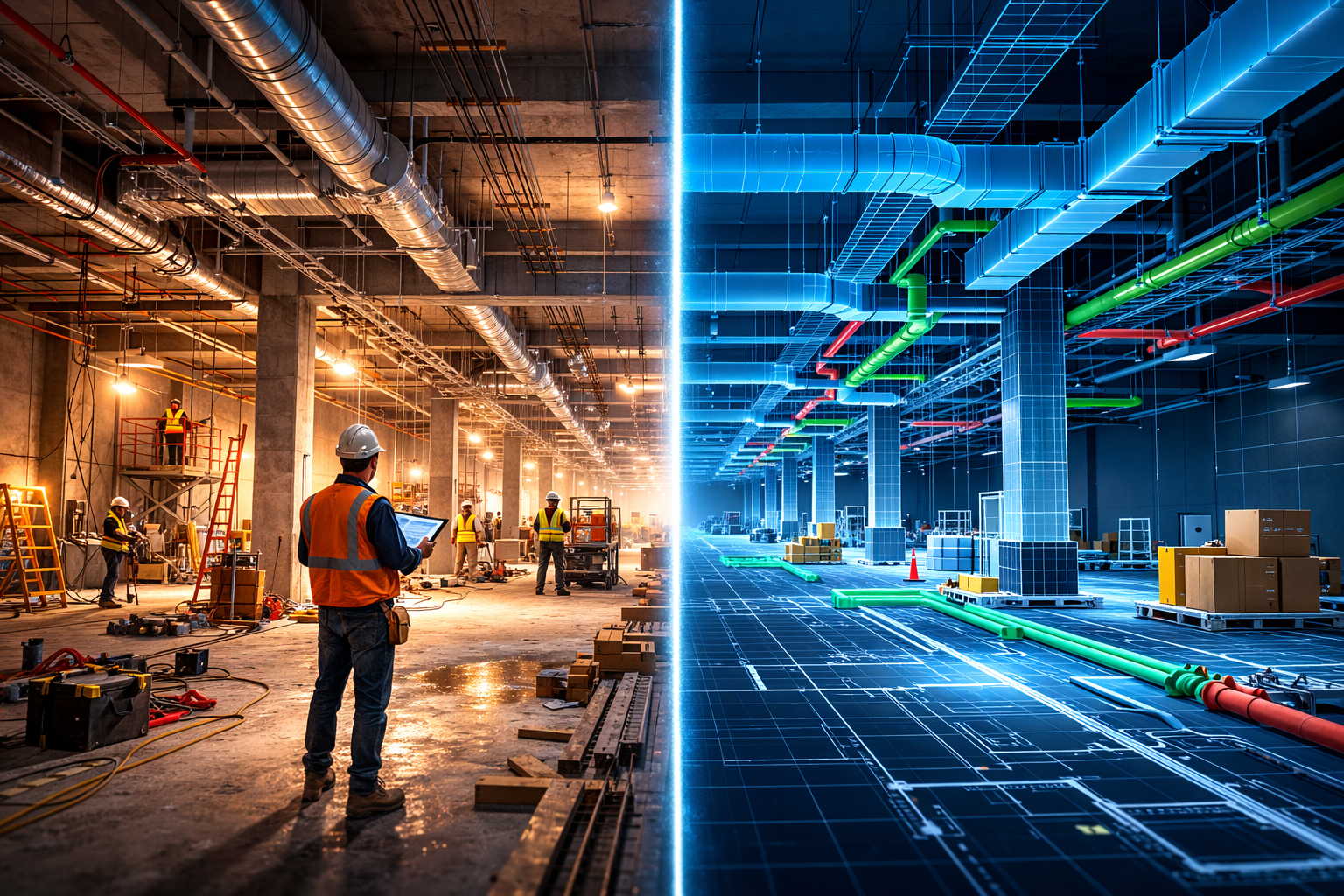
BIM adoption is no longer the challenge. Every serious AEC firm models in 3D. The new dividing line is validation, and most firms are still on the wrong side of it.
Solibri has been making the case for BIM validation for years. As one of the leading model-checking platforms in the industry, it works with AEC firms to catch errors in the model before those errors reach the jobsite. That sounds straightforward. In practice, most firms still treat validation as something that happens occasionally, or at the end of a phase, rather than as a discipline built into the daily workflow.
Three articles Solibri published recently push back on that. Each one focuses on a different project type: data center construction, public transportation infrastructure, and design-build delivery. Taken separately, each makes a strong case on its own terms. Read together, they build something more useful: a clear picture of how the same underlying problem is playing out across very different parts of the industry, and why the stakes keep rising.
The connecting thread is clear. Technical complexity, legal accountability, delivery speed: each project type adds pressure in a different way. But the conclusion is the same each time. Getting the model right is not optional anymore. It is a business requirement.
Here is what each piece covers, and why it is worth paying attention to.
1) Data Centers: When Speed and Scale Demand Precision
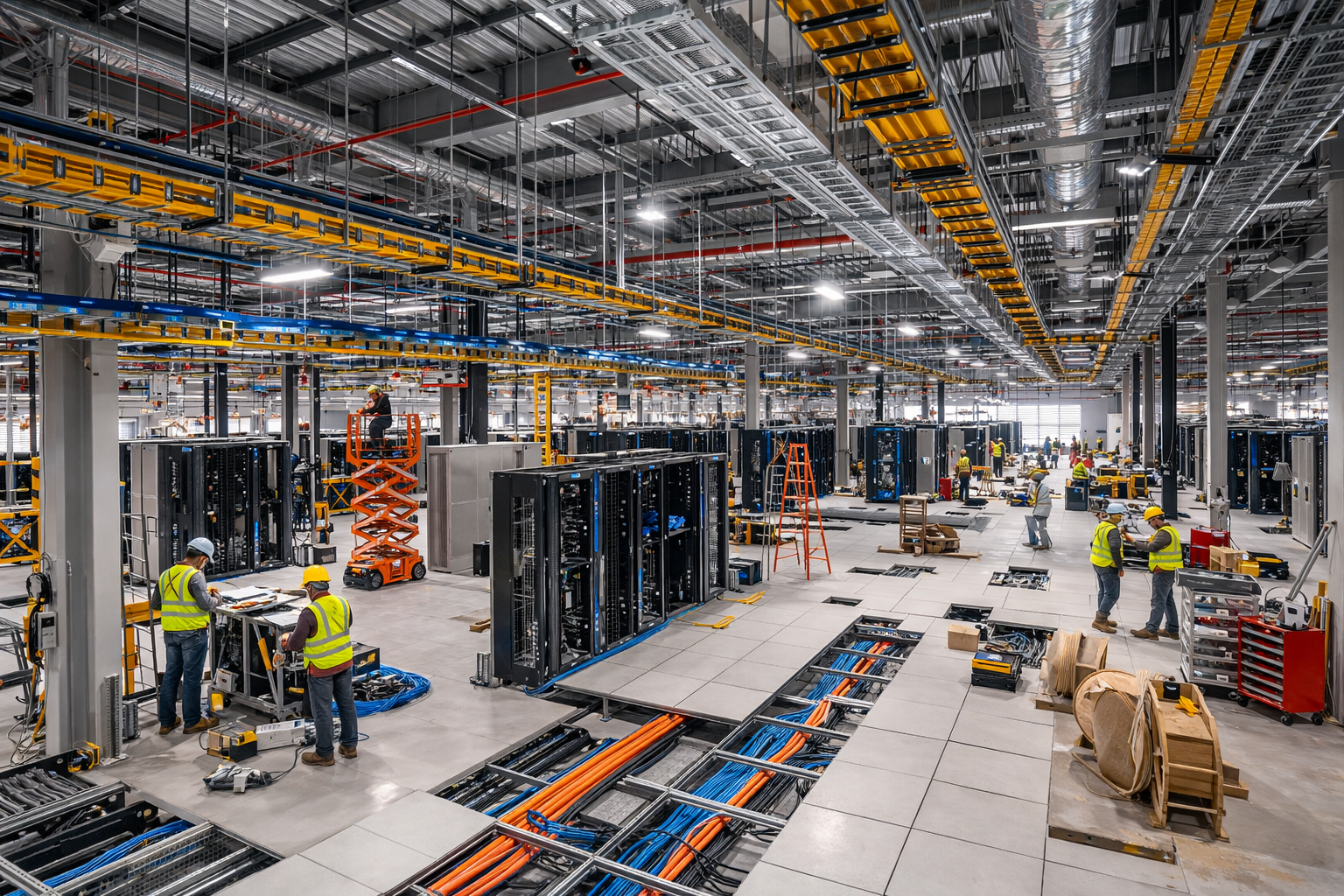
The data center construction market is expected to nearly double over the next five years, with global infrastructure investment approaching $7 trillion annually, per McKinsey. For AEC firms who want a piece of that work, these projects are technically demanding unlike almost anything else.
Data centers are extraordinarily dense environments. Fitting all of that into a coordinated, safe, and maintainable space is harder than it looks. Solibri spoke with Matthew Lohden, Senior Consultant in the Innovation Division of Accenture's Infrastructure and Capital Projects arm, about what that means in practice:
"The really big challenges in data centers are getting all of the electrical, telecommunications, and mechanical systems to fit in the most efficient package possible. That doesn't necessarily mean the tightest package because there has to be room for everybody to move around and maintain and update the place efficiently and safely." – Matthew Lohden, Senior Consultant, Accenture Infrastructure & Capital Projects
This is precisely where an unvalidated model does its worst damage. A clash between an underground bus duct and a bollard footing, a cable tray positioned too low for lift access: none of these are visible until they become field problems. In a high-voltage setting, rework is not only a budget issue. It directly increases safety risk to the people doing it.
Rule-based model checking lets teams define what "correct" looks like, then runs those rules across the full federated model on every change, after every subcontractor model is added. Issues are ranked by severity. Fixes are tracked. As Lohden noted:
"Right now, I can't imagine that anyone is building data centers without BIM. With Solibri, we can do a thorough, complete, and detailed model coordination review much more quickly. Plus, the reports are actually actionable." – Matthew Lohden, Senior Consultant, Accenture Infrastructure & Capital Projects
Data center requirements are also shifting fast: from air-cooled to liquid-cooled, from standard rack densities to AI-driven loads exceeding 100kW per rack. A validated model is not a one-time task. It is the ongoing mechanism that keeps the project on course.
The full Solibri article goes deeper on exactly how teams apply this in practice, including the three-step validation process Lohden outlines for keeping data center projects on track.
Read the full Solibri article: Why the Speed and Scale of Data Centers Makes BIM Validation Critical
2) Transportation Infrastructure: When the Model Becomes the Law
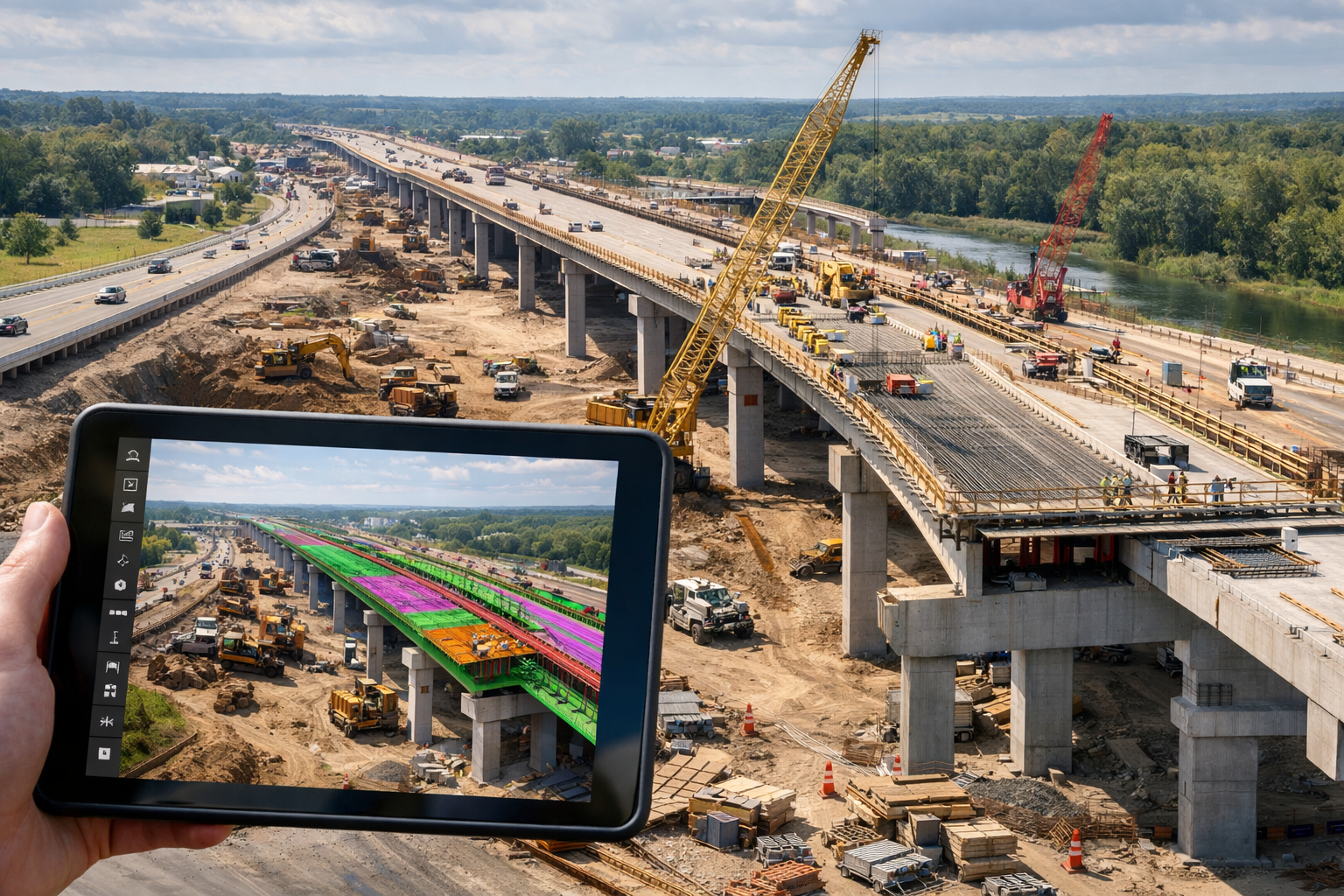
Data centers show the technical cost of getting the model wrong. The second Solibri article highlights something that will catch many AEC firms off guard: the legal cost.
For most of BIM's history on public projects, the 3D model played a supporting role alongside traditional 2D contract documents. That is changing fast. State departments of transportation across the U.S. are piloting programs where the model does not supplement the drawings. It becomes the legal document. Utah has greenlit full Model as Legal Document (MALD) projects under its digital delivery program. Pennsylvania launched its pilot in 2023. Texas has issued formal guidance announcing its transition to digital delivery with the model as the contractual authority. AASHTO has published readiness frameworks to help DOTs assess whether they are prepared to follow.
Michael Warren, Digital Growth Lead at AECOM, the largest design firm by revenue per ENR rankings, has watched this shift up close. His take:
"As DOTs and the FHWA started to realize the benefits of data-rich 3D models and vendors started to create software products that could deliver things in the transportation space, it got fascinating. The world opened up." – Michael Warren, Digital Growth Lead, AECOM
When the model is the legal document, it has to be as reliable as a signed drawing set. It must be the single source of truth for design intent, construction, quantity takeoffs, and long-term asset management. Any error becomes a legal liability. BIM execution plan requirements for some highway projects already run hundreds of pages, and the bar keeps rising.
Meeting that standard means validating on two levels.
-
Geometrically: clashes, clearances, and conflicts resolved before they reach the field, including confirming maintenance access to components that will need servicing for decades, from valve handles to bridge scuppers.
-
Semantically: standardized naming conventions, compliant object libraries, and IFC-based data structures so every stakeholder, from the contracting agency to the smallest subcontractor, can read and use the model in their own platform.
As Warren put it:
"With Solibri, you can check model integrity. Were the elements in the model created meeting ISO or other industry standards for what a model should contain? Then, for clash detection, the tool will take you to views that are already established or create new ones, preferably a three-dimensional isometric view, that clearly demonstrates we have an interference." – Michael Warren, Digital Growth Lead, AECOM
The full article goes further, covering how openBIM standards and IFC adoption are making MALD programs practical at scale, and what the as-built model means for long-term infrastructure asset management. If your firm works on publicly funded projects, this one is required reading.
Read the full Solibri article: MALD: How the Model as a Legal Document Is Changing Transportation Digital Delivery
3) Design-Build: Faster Delivery Requires a Validated Spine
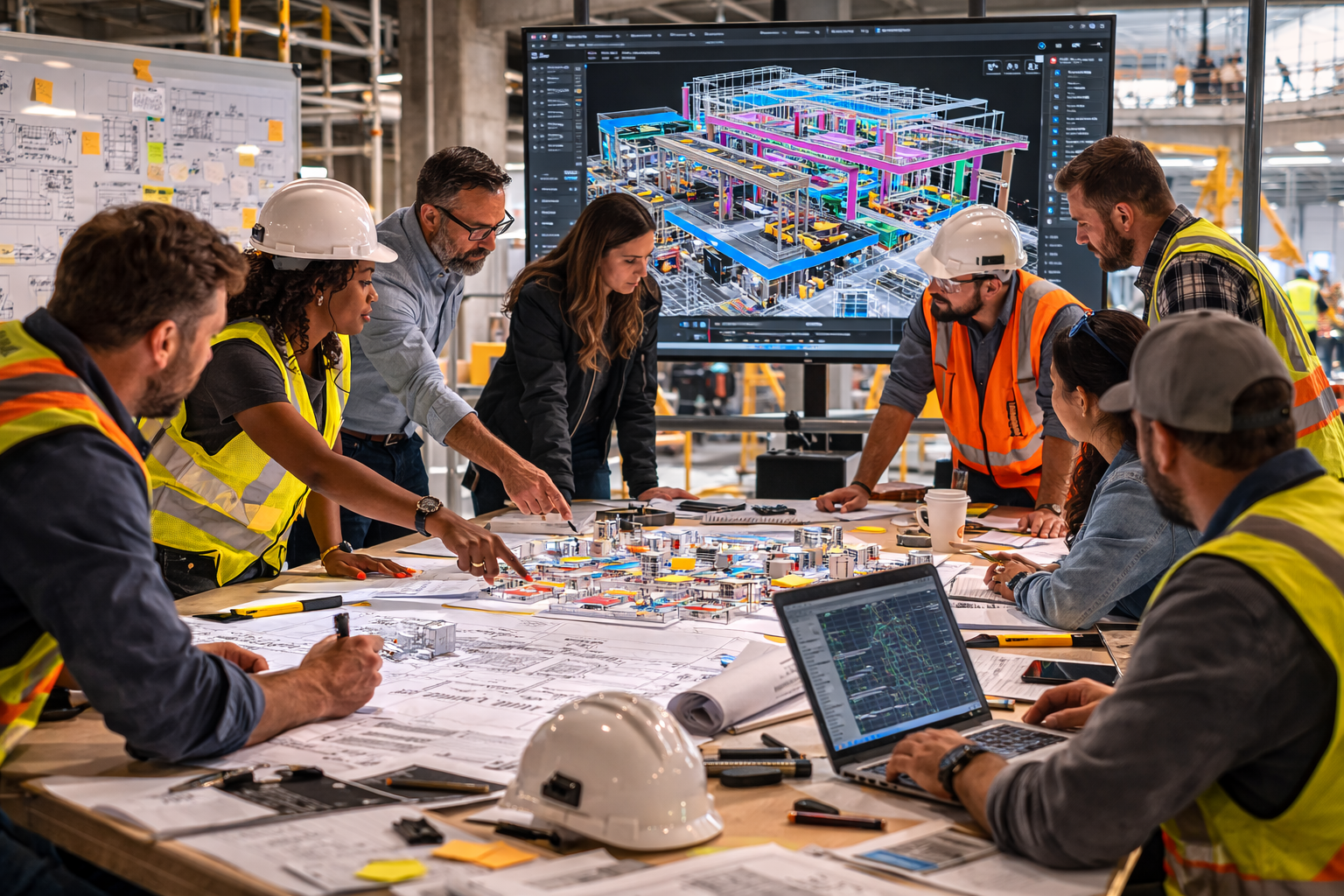
Technical complexity and legal accountability are two strong reasons to validate continuously. The third Solibri article shows why if your delivery model depends on speed, an unvalidated model is the fastest way to lose it.
Design-build puts design and construction under one roof. Teams work in parallel instead of in sequence, which cuts timelines significantly. A buildingSMART international survey found 31% of respondents already using 4D BIM and 27% using 5D BIM. But concurrent delivery has a problem that sequential delivery avoids: errors do not stay in one phase. They travel.
A buildability problem, a fire safety gap after a layout change, a clearance that no longer works after a design revision: in design-build, these do not wait for a review meeting. They show up on the jobsite, where they cost far more to fix.
Continuous model checking is what keeps speed from becoming a liability. Every iteration validated before it leaves the office. Every change checked before it reaches the field.
There is also a workforce gap to contend with. The construction industry is short roughly half a million workers, per U.S. Census Bureau data. Firms cannot always put their most experienced people on every task. Rules encoded in checking software carry the judgment of senior engineers to every team member, including those still building their instincts. The model becomes a training tool as much as a delivery tool.
At closeout, that validated model becomes a delivery asset. More owners now require an accurate as-built model at handover. On a design-build project there is no other party to produce it. A well-validated process throughout construction makes the as-built a natural output rather than a last-minute rebuild.
The full Solibri article covers four specific ways model checking strengthens design-build delivery, from maintaining agility through design changes to seamless owner handover.
Read the full Solibri article: Design-Build and BIM: A Perfect Match
In Conclusion
Data centers, MALD transportation projects, and design-build delivery are very different from each other. But they share one thing: in each case, the cost of an unvalidated model has crossed a line. It is no longer an internal quality matter. It is a project risk with real consequences for budget, schedule, safety, and legal standing.
The firms moving fastest are not the ones with the most sophisticated models. They are the ones who check their models constantly, on every change, across every discipline, acting on what they find. The model is right. Everything downstream works better because of it.
For firms still treating validation as a final step, the fix is not a new tool. It is a new habit. Rule-based checking software can run across a full federated model in minutes. Run it on every change. Act on what it finds.
To learn more, visit Solibri’s official page on aec+tech or explore the latest features and request access on the Solibri website
Recent Articles
Learn about the latest architecture software, engineering automation tools, & construction technologies